
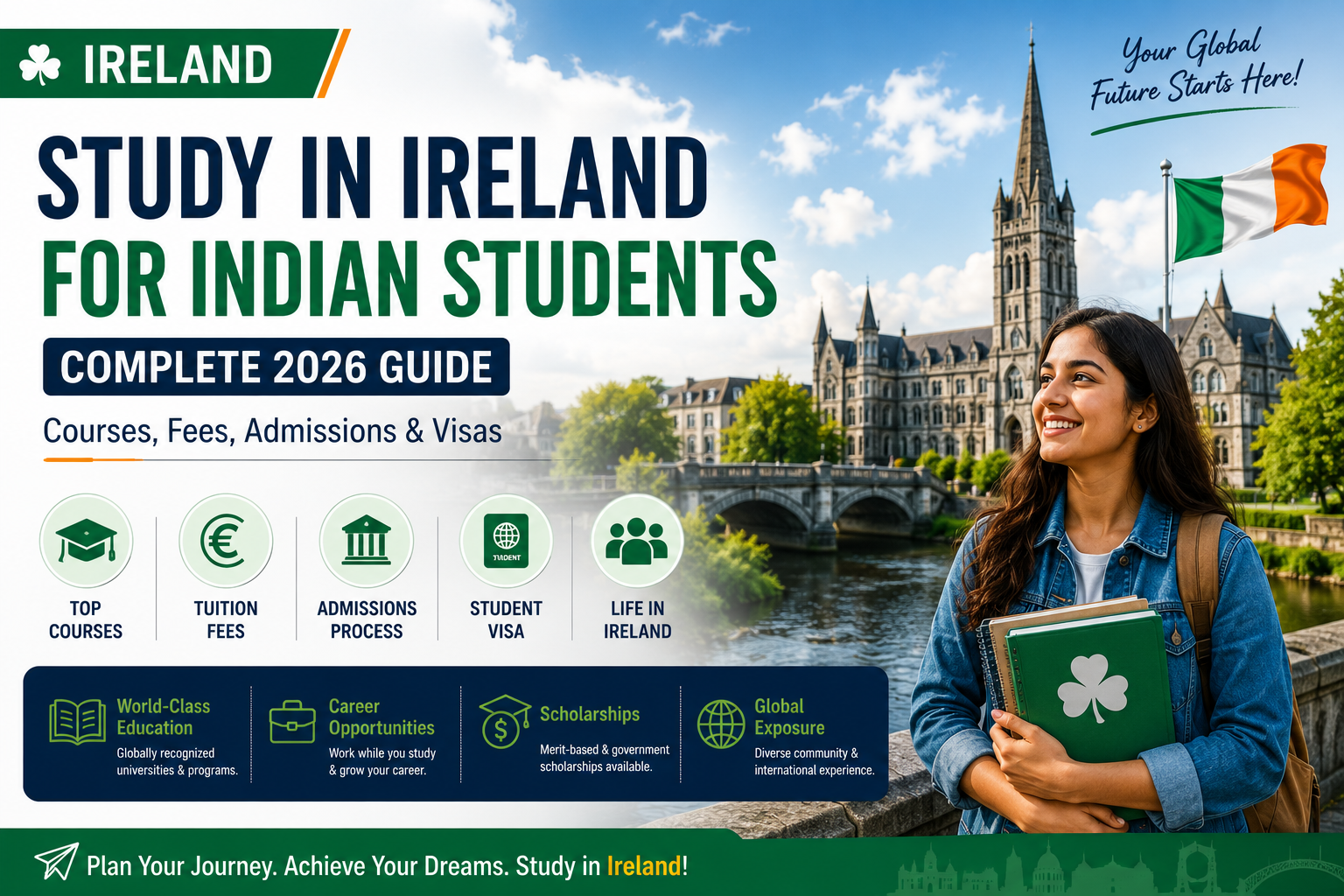
Quick Answer
Is Ireland a good study-abroad destination for Indian students? Ireland can be an attractive option for Indian students because it offers English-medium higher education, a wide range of programmes, international career exposure and opportunities to gain experience after graduation. Students can choose from fields such as technology, business, engineering, healthcare, science and data, depending on their academic background and career goals.
Before applying, students should compare courses, universities, tuition fees, living costs, admission requirements, visa requirements and career opportunities to find an option that suits their profile.
Why Do Indian Students Choose Ireland?
Ireland offers several advantages for international students looking for an English-speaking study destination in Europe.
Key factors include:
- English-language education
- Internationally oriented universities
- Strong technology and business sectors
- Opportunities for international students
- A multicultural environment
- Exposure to international career opportunities
Ireland is also home to industries across technology, pharmaceuticals, finance, business, engineering, healthcare and data. This can make the country an interesting option for students who want international academic and professional exposure.
However, there is no single “best” university or course for every student. Your decision should be based on your academic background, career goals, budget and preferred programme.
What Can Indian Students Study in Ireland?
Indian students can choose from a variety of undergraduate and postgraduate programmes.
| Study Area | Popular Options |
|---|---|
| Technology | Computer Science, AI, Data Analytics |
| Business | Finance, Management, Marketing |
| Engineering | Mechanical, Electrical, Civil |
| Healthcare | Nursing, Public Health |
| Science | Biotechnology, Pharmaceutical Science |
| Data | Data Science, Business Analytics |
When selecting a programme, look beyond the course title. Check the curriculum, modules, practical learning opportunities and skills you will develop.
The right course should also connect with your previous education and long-term career plans.
How to Choose the Right Course and University
Before shortlisting universities, consider:
- Course curriculum: Does it match your career goals?
- Eligibility: Do you meet the academic requirements?
- Tuition fees: Can you comfortably manage the programme cost?
- Location: What are the accommodation and living costs?
- Career opportunities: Does the programme support your intended career?
- University support: What services are available for international students?
Don’t choose a university based solely on rankings. A programme that matches your academic and career objectives may be a better choice than a higher-ranked institution that doesn’t fit your requirements.
Ireland Admission Requirements for Indian Students
Admission requirements vary depending on the university and programme.
Students may need:
- Academic transcripts
- Degree certificates
- Passport
- English-language proficiency evidence
- Statement of purpose
- Letters of recommendation
- CV
- Portfolio for selected programmes
Some courses may have additional academic or professional requirements.
English-Language Requirements
English-language requirements depend on the institution and programme. Indian students should check the exact requirements for each shortlisted course rather than assuming that one requirement applies to every university.
Statement of Purpose and Recommendations
Your statement of purpose should explain your academic background, reasons for choosing the programme and future goals.
If recommendation letters are required, choose appropriate recommenders and allow enough time for them to prepare the documents.
How Much Does It Cost to Study in Ireland?
There is no single tuition fee or total cost that applies to every international student.
Your overall budget should include:
Tuition + accommodation + food + transport + insurance + visa/immigration expenses + personal expenses
Tuition Fees
Fees vary according to the university, programme and level of study. Always check the latest fee information provided by your chosen institution.
Living Expenses
In addition to tuition, Indian students should budget for:
- Accommodation
- Food
- Transportation
- Study materials
- Insurance
- Personal expenses
Accommodation can be a significant part of the overall budget, so research housing options and costs before travelling.
A lower tuition fee does not necessarily mean a lower total cost. Compare the complete annual cost when evaluating universities.
Ireland Student Visa Requirements for Indian Students
After receiving an offer from an Irish institution, students need to prepare for the appropriate visa process.
Education Ireland lists requirements that can include an acceptance letter, evidence of academic ability, proof of fees, financial evidence, private medical insurance and other supporting documentation. Its current guidance cites €10,000 as evidence of funds for the initial part of the stay.
Because immigration requirements can change, students should verify the latest requirements with the official Irish immigration authorities before applying.
Depending on your circumstances, you may need documents such as:
- Passport
- University acceptance documentation
- Academic documents
- Proof of fees
- Financial evidence
- Medical insurance documentation
- Other supporting documents
Start preparing these documents early to avoid unnecessary delays.
How to Apply to Study in Ireland: 10 Steps
The overall process can be divided into these steps:
1. Choose your course
Identify programmes that match your academic background and career goals.
2. Shortlist universities
Compare courses, universities, locations, fees and admission requirements.
3. Check eligibility
Review academic and English-language requirements.
4. Prepare documents
Collect transcripts, certificates, passport, SOP, recommendations, CV and other required documents.
5. Submit applications
Complete your applications and submit all required materials.
6. Receive an offer
Review the offer carefully, including any conditions and deadlines.
7. Arrange finances and accommodation
Plan your tuition payments, living budget and housing.
8. Apply for the appropriate visa
Prepare and submit your visa application according to the latest requirements.
9. Travel to Ireland
Arrange your travel and prepare the documents you will need when entering the country.
10. Complete arrival formalities
Complete the required registration and other arrival procedures applicable to your circumstances.
How Early Should Indian Students Start Planning?
It is better to start your study-abroad planning well before your intended intake.
A simple planning sequence is:
Research → Shortlist → Check Eligibility → Prepare Documents → Apply → Offer → Finances & Accommodation → Visa → Travel
Starting early gives you more time to compare universities, prepare documents, meet language requirements, arrange finances and search for accommodation.
Application deadlines can vary between institutions and programmes, so always check the deadline for your specific course.
Common Mistakes Indian Students Should Avoid
Choosing a Course Only Because It Is Popular
A popular programme may not necessarily match your academic background or career goals. Look at the curriculum and career relevance before deciding.
Looking Only at Tuition Fees
Your total budget also includes accommodation, food, transport, insurance and other expenses.
Ignoring Programme Requirements
Meeting general university requirements does not automatically mean you meet the requirements for every programme. Check the specific course criteria.
Waiting Until the Last Minute
Applications involve multiple stages. Starting early gives you more time to prepare documents and deal with unexpected delays.
Treating Every University the Same
Admission requirements, deadlines, fees and English-language requirements can vary. Always check the information provided by your chosen institution.
FAQs
Is Ireland good for Indian students?
Ireland can be a suitable option for Indian students seeking English-medium higher education, international exposure and opportunities to gain experience after graduation. The right choice depends on your course, budget, academic profile and career goals.
Do Indian students need IELTS to study in Ireland?
English-language requirements depend on the institution and programme. Check the specific requirements of your chosen university before applying.
What can Indian students study in Ireland?
Popular areas include technology, business, engineering, healthcare, science, biotechnology, pharmaceutical science, data science and business analytics.
How much does it cost to study in Ireland?
Costs vary by university and programme. Students should budget for tuition, accommodation, food, transport, insurance, visa or immigration expenses and personal costs.
What documents are required to study in Ireland?
Depending on the programme, students may need academic transcripts, degree certificates, passport, English-language proficiency evidence, statement of purpose, recommendation letters, CV and a portfolio where applicable.
How early should I start applying to Ireland?
Start researching well before your intended intake. Deadlines vary by institution and programme, so check the dates for each shortlisted course.
Leave a Reply