
Quick Answer
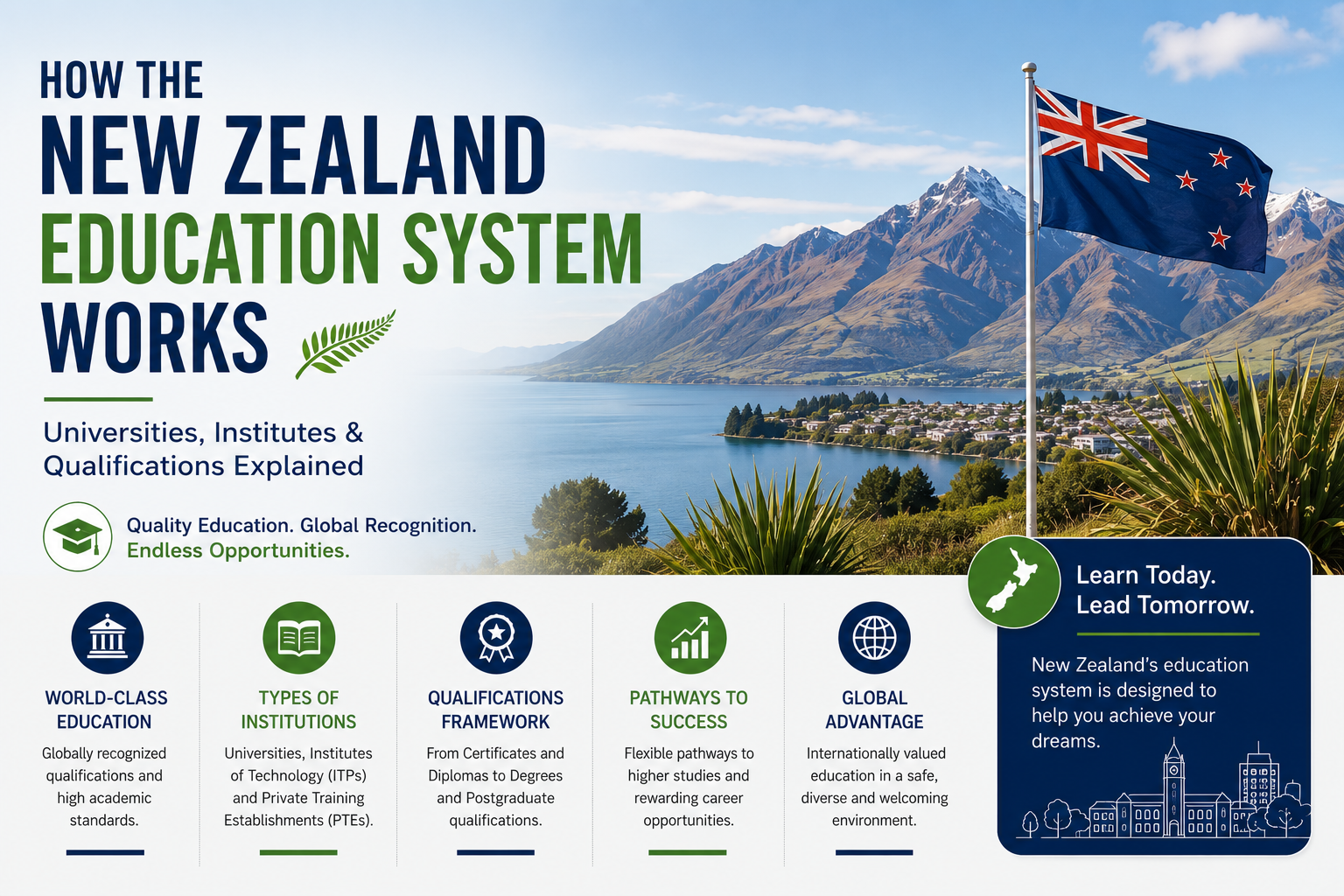
How does the New Zealand education system work? New Zealand’s tertiary education system includes universities, institutes of technology and polytechnics, and private training establishments (PTEs). These providers offer qualifications ranging from certificates and diplomas to degrees and postgraduate qualifications.
Universities generally focus on academic and research-based education, while institutes of technology and polytechnics offer more practical and career-focused programmes. PTEs provide specialized programmes, often designed around particular industries.
Understanding these options can help international students choose the right institution and qualification based on their academic background and career goals.
What Are the Main Types of Higher-Education Providers in New Zealand?
New Zealand’s tertiary education system has several types of providers. Each has a different focus and may suit different types of students.
| Provider | Main Focus |
| Universities | Academic and research-focused education |
| Institutes of Technology & Polytechnics | Practical and career-focused education |
| Private Training Establishments (PTEs) | Specialized and industry-focused programmes |
Students should consider their preferred learning style, qualification level and career plans when comparing these options.
Universities in New Zealand
New Zealand has eight universities, offering undergraduate and postgraduate study through to doctoral level.
Universities generally provide an academic and research-oriented environment. They can be suitable for students looking for traditional degree programmes or planning to continue into postgraduate and research study.
When comparing universities, look at:
- Available courses
- Entry requirements
- Course structure
- Qualification level
- Location
- Total cost
- Career relevance
- Student support
Rather than choosing a university simply because it is well known, focus on whether the programme fits your academic and career objectives.
Institutes of Technology and Polytechnics
Institutes of technology and polytechnics provide a more practical and career-focused approach to tertiary education. Their programmes can include certificates, diplomas, applied degrees and technical programmes.
This option may suit students who prefer practical learning and want to develop skills connected to specific industries.
The choice between a university and polytechnic should therefore depend on your goals. A university may be more suitable for an academic or research pathway, while a polytechnic can be an option for students looking for practical and industry-focused education.
Private Training Establishments
Private Training Establishments (PTEs) are another part of New Zealand’s tertiary education system.
PTEs often offer specialized programmes designed around particular industries.
Students considering a PTE should research the specific provider and programme carefully. Check the qualification, course content, entry requirements and how the programme fits into your long-term study or career plans.
Understanding New Zealand Qualifications
New Zealand’s tertiary providers offer qualifications ranging from certificates and diplomas to degrees and postgraduate qualifications. The New Zealand Qualifications Framework (NZQF) helps students understand qualification levels and types.
Before selecting a programme, consider:
- Your existing qualifications
- The qualification you want to earn
- Your intended career
- Whether you plan to pursue further study
- The programme’s entry requirements
- Your preferred style of learning
Understanding the qualification level can make it easier to compare programmes from different institutions.
University vs Polytechnic: Which Should You Choose?
There is no single answer because the right choice depends on your goals.
A university may be suitable if you:
- Want an academic or research-oriented pathway
- Are looking for a traditional degree
- Plan to pursue postgraduate or doctoral study
- Prefer an academically focused environment
A polytechnic may be suitable if you:
- Prefer practical learning
- Want career-focused education
- Are interested in technical or applied programmes
- Want to develop industry-related practical skills
The programme itself is also important. Two institutions may offer programmes in the same broad field but have different course structures and learning approaches.
How Should International Students Choose an Institution?
Start with your career objective and preferred course, rather than choosing an institution first.
Ask yourself:
What do I want to study?
Then consider:
Which qualification and type of institution best support that goal?
Once you have answered these questions, compare institutions based on:
- Programme content
- Qualification level
- Entry requirements
- Learning style
- Location
- Cost
- Career relevance
- Student support
This approach can help you build a more relevant shortlist.
What Should You Check Before Applying?
Before submitting an application, carefully review the information provided by your chosen institution.
Check the qualification
Understand exactly what qualification you will receive after completing the programme.
Check entry requirements
Make sure you meet the academic and other requirements for admission.
Review the programme
Look at the subjects, modules and overall structure to understand what you will study.
Consider the learning style
Decide whether you prefer academic and research-focused education or practical and career-oriented training.
Compare the total cost
Consider tuition as well as other expenses associated with studying and living in New Zealand.
Research the location
Your choice of location can affect accommodation, transport and lifestyle, so consider this when comparing institutions.
FAQs
How many universities are there in New Zealand?
New Zealand has eight universities, offering undergraduate and postgraduate study through to doctoral level.
Are polytechnics the same as universities?
No. Universities and polytechnics are different types of tertiary providers. Polytechnics generally have a stronger practical and vocational focus.
What qualifications can I study in New Zealand?
New Zealand’s tertiary education system offers qualifications ranging from certificates and diplomas to degrees and postgraduate qualifications.
Should I choose a university or polytechnic?
It depends on your goals. Universities may be better suited to academic and research-oriented pathways, while polytechnics can be appropriate for students who prefer practical and industry-focused education.
Plan Your Study in New Zealand with Digital Globus
Choosing the right institution and qualification is an important part of planning your international education.
If you’re considering studying in New Zealand but aren’t sure whether a university, polytechnic or specialised provider is right for you, Digital Globus can help you explore your options.
From course selection and institution shortlisting to application and study-abroad guidance, the right information can help you make a more informed decision.
Leave a Reply